|
Reliable Hardware quantifies how acoustically open their various
flat stock is. The more open to air flow a grill is, the less it
reflects output back at the cone, and the lighter it will be for its
type. I would never recommend anything less than 50% open. expanded diamond cut - 63% open 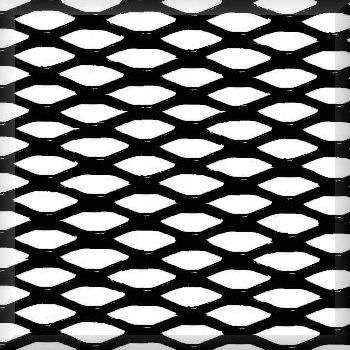 perforated 5/32" round hole - 62.4% open 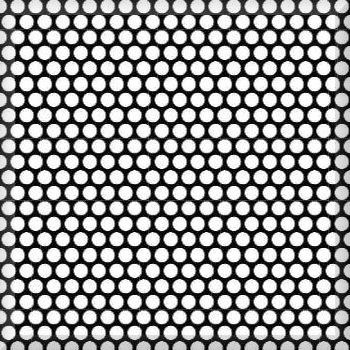 and in distant third: perforated 3/8" square hole - 56.2% open 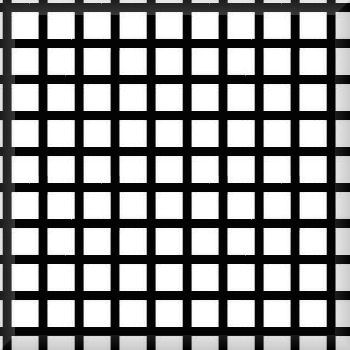 After doing a lot of web crawling these seem to be the way to go for full-coverage metal jackets. My preference used to be the expanded diamond cut, but the 5/32 round hole grill has taken its place. Downsides to Reliable? Minimum order there is $25, and shipping for only one grill is rather high. So you may want to order something else there too |

Showing posts with label speaker grill. Show all posts
Showing posts with label speaker grill. Show all posts
Wednesday, June 13, 2012
The Grill Effect: Woofer Covers (4)

The Grill Effect: Woofer Covers (3)
To give an idea of how much air is actually blocked, Nickerson made the following calculations:
\In the same thread, Tom Young added this:
Some other handy notes from there:
It was a real eye opener! High frequency response actually appeard *stronger* with the grille in place! We ran the test a number of times, just to verify, and no, we didn't have the curves mixed up. All we can come up with is that the grille must somehow increase high-frequency diffraction. The mic was placed directly front and center, about 1 meter away. The room itself was fairly dead.
If anyone can come up with some other explanation, I'm all ears. Curves posted below - W/O grill = green, W/grille = red.
John
..
In the earlier graph, the grille was screwed down directly to the wood, which resulted in a metallic ringing sound when tapping the grille. I'm wondering if this is what caused the earlier, unexpected result? For these later tests, the grille was isolated from the cabinet by foam gasket material on all edges, which eliminated the ringing. Also, these later tests were done without the 1/6 octave smoothing, and low frequencies were windowed out.
I think it clearly can be stated that grilles of this type likely introduce comb filtering, at least at higher frequencies:
...
This latest series of tests show that the earlier results I posted were apparently not too accurate, and that grilles can have a negative, if somewhat minor effect,
John
Quote:
|
"I just did some calculations on a 4"x4"
section of speaker grille.My speakers contains 121 1/4" circular holes
per 4"x4" section,so if my math is right ,that is a total of about 5.93
square inches of 'circular holes' punched into a total area of 16
square inches which means that about 62% of the area immediately in
front of my speaker is covered by what appears to be about 3/32" steel
plate. I am curious if this amount of metal directly in front of a speaker could have a noticably degrading effect that could be improved by either removing the grille or replacing it with something lighter duty? Has anyone explored this further and come up with any conclusions?" Speaker Grille Thread |
Quote:
|
The best I have found in a metal grill
material with anything approaching enough protection is from a
McNichols perforated steel, 12 guage and with 1/4" holes with a
resulting 58% transparency. Given the lack of flat area facing the drivers (because the holes have rounded edges and are so densely packed), I haven't observed much, if any, HF reflection from this stuff. I have observed reflected HF energy in other grill materials including most of the available purpose-built speaker grill cloth from Accustone, etc. (which surprised me). Your calculations appear to result in 48% transparency. I personally would try to improve this. Go to www.micnichols.com and then select "Round Hole", then "Round Hole Pattern", then select from materials "plain steel" and then hit "view stock list" and after this loads, scroll down to 1/4" hole size, 5/16" hole centers, staggered, 12 gauage and 58% open area. That's probably the best you can do. Be prepared to spend some good money for the stock and then go through the process of degreasing the metal, cutting it to size and then finishing it. Obviously for small batches this is probably too much cost and effort." Tom Young Electroacoustic Design Services Oxford CT |
Quote:
|
I have gotten a few sheets of perf metal from
Mc-Nichols for the floor monitors I have built. I went with the 5/32nd
hole size with 3/16th spacing and that figured out to be 63% open area.
But that size is only available in 16 gauge thickness. If I were doing
punk shows I would have gone with a much heavier gauge and less open
area! But the 16 is easy to form on curves. I also have a layer of 1/4 inch acoustic foam on the underside of the perf metal. Mike Caldwell |
Quote:
Well, this whole thread got me wondering,
since no one posted any real numbers, curves, etc, derived from actual
tests - only hearsay. So last weekend, we ran some tests using CLIO on a
brand new custom monitor, consisting of a JBL 2206H LF, 2426J HF on a
JBL PT horn, custom crossover at 1200hz, and punched-metal grille
material identical to the current stuff JBL uses, with the ~1/4"
closely spaced holes.It was a real eye opener! High frequency response actually appeard *stronger* with the grille in place! We ran the test a number of times, just to verify, and no, we didn't have the curves mixed up. All we can come up with is that the grille must somehow increase high-frequency diffraction. The mic was placed directly front and center, about 1 meter away. The room itself was fairly dead.
If anyone can come up with some other explanation, I'm all ears. Curves posted below - W/O grill = green, W/grille = red.
John
..
In the earlier graph, the grille was screwed down directly to the wood, which resulted in a metallic ringing sound when tapping the grille. I'm wondering if this is what caused the earlier, unexpected result? For these later tests, the grille was isolated from the cabinet by foam gasket material on all edges, which eliminated the ringing. Also, these later tests were done without the 1/6 octave smoothing, and low frequencies were windowed out.
I think it clearly can be stated that grilles of this type likely introduce comb filtering, at least at higher frequencies:
...
This latest series of tests show that the earlier results I posted were apparently not too accurate, and that grilles can have a negative, if somewhat minor effect,
John
The Grill Effect: Woofer Covers (2)
One can see from the typical grill pattern how much air is being blocked:

Fender has been using the above style on their "Rumble" bass amps,
and it looks stylish with careful folding, but it blocks a lot of air....
Something like this below would be better, blocking less air:

But my concern here is still that wind-noise might be generated by the sharp corners and edges.
Something more promising is this:

This is actually offered as speaker-grill material.
Encouraging, but perhaps still not light enough in my mind.
Another popular style is as below:

This is a type of cut and stretched grill made of sheetmetal.
The protection is rather good, especially in smaller hole formats,
but the drawback is that this is like a very sharp cheese-grater!
You can really injure yourself on these, even when painted,
and I'm still dubious of the amount of air-blockage and wind-noise potential,
although the angled flat-spaces prevent direct reflections back into the speaker.
It has an ugly look, unless painted black and also the wood etc. see-through is also treated with black paint.
Using light-blocking cloth might be self-defeating in terms of trying to minimize wind-resistance.
I'm still thinking even more space, like this over-stretched pattern below:
expanded metal for bbq grill

But the problem now would be how to buy in small quantities.
This kind of stuff is custom-made and ordered by the skid-full.
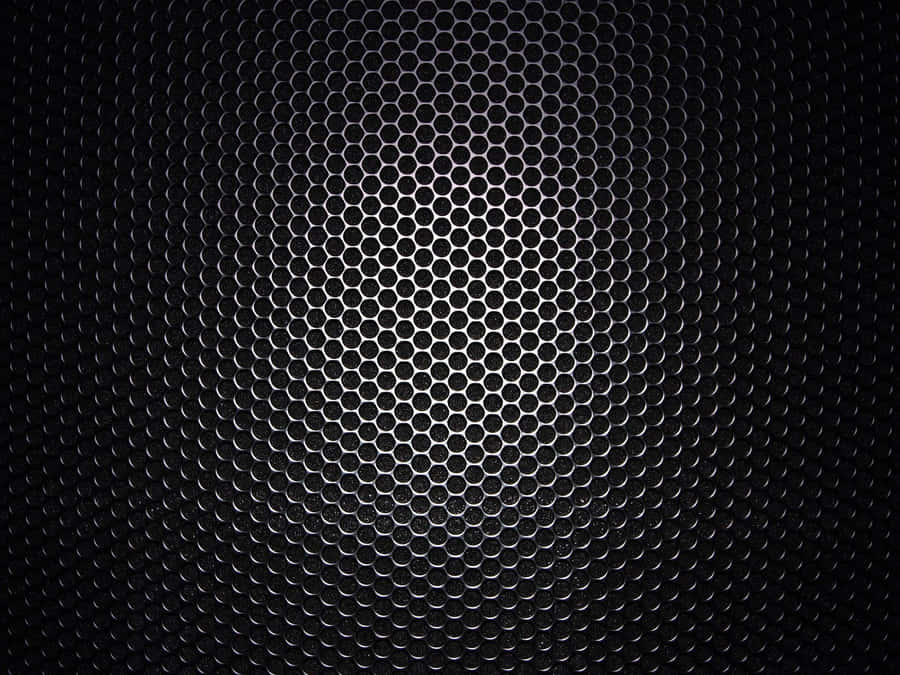
Fender has been using the above style on their "Rumble" bass amps,
and it looks stylish with careful folding, but it blocks a lot of air....
Something like this below would be better, blocking less air:

But my concern here is still that wind-noise might be generated by the sharp corners and edges.
Something more promising is this:

This is actually offered as speaker-grill material.
- Product: Speaker Mesh
- Model Number: TY15-18
Encouraging, but perhaps still not light enough in my mind.
Another popular style is as below:
This is a type of cut and stretched grill made of sheetmetal.
The protection is rather good, especially in smaller hole formats,
but the drawback is that this is like a very sharp cheese-grater!
You can really injure yourself on these, even when painted,
and I'm still dubious of the amount of air-blockage and wind-noise potential,
although the angled flat-spaces prevent direct reflections back into the speaker.
It has an ugly look, unless painted black and also the wood etc. see-through is also treated with black paint.
Using light-blocking cloth might be self-defeating in terms of trying to minimize wind-resistance.
I'm still thinking even more space, like this over-stretched pattern below:
expanded metal for bbq grill
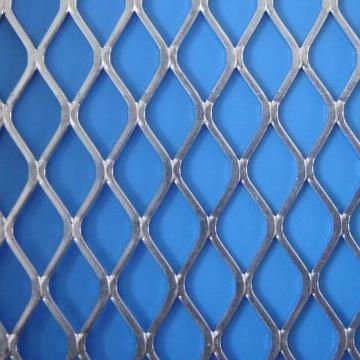
Quote:
|
Expanded Steel Grille - Black (1220mm x 914mm x 1mm) Decorative Steel Expanded Metal Mesh. Black.
Expanded Metal Mesh:
1.specifications: Material: Thickness: 0.3 to 9mm Long way of pitch: 3 to 200mm Short way of pitch: 3 to 80mm 2.Materials: steel plate, stainless steel plate, aluminum plate, titanium plate, lead plate, nickel plate, and more . 3.Process: Punched into holes of diamond shape, square, round, triangle, scale hole. 4.General Use:Used in agriculture, industry, fencing, outdoor furniture, speaker grills, machine and window guards, shelving and racks, security walls, and more.With good strength, wear resistance and nice looking, expanded sheet metal mainly serves to construction of railway, roads, buildings; also protection of machines, electrical appliances, windows. Expanded metal mesh :long way is 3-200mm ,short way is 3-80mm ,thickness is 0.3-9mm . |
This kind of stuff is custom-made and ordered by the skid-full.
The Grill Effect: Woofer Covers
This is not about grill cloths.
I'm assuming that those vary widely, and essentially soften the high end (treble),
with the lighter the fabric, the sparser the weave, the better.
I'm talking now about bass woofer screens, made of metal.
These appear to physically block half the radiating area or more.
I'm guessing that these metal grills cause significant effects:
(1) They must cause half-power size reflections back into the speaker cone, and 'shadow' cancellation at odd frequencies, especially for woofers that are going up to 120 - 1200 Hz.
(2) They must cause sound wave diffractions around the grill pattern, and perhaps add harmonic or intermodulation distortion to the original sound-waves.
(3) They must also possibly contribute "whistles", i.e., wind noises, especially with loud subwoofers and large excursion speakers.
This so far is just in my head.
But I was thinking that you could have almost as good protection (which is the main purpose for me, as opposed to looks, which are always dubious) with thin metal screening,
i.e., protection from pencil-poking, cap cave-ins, and furniture corners, falling drunks etc.,
But with a coarse, but thin metal screen there should be a lot less effect on sound(?).
I'm interested to hear others' experiences in this area,
and product evaluations, because I see little out there in the minimalist direction.
I wish they'd just make cheap covers for say 10" / 12" woofers that were black, see-through, and of a light enough gauge to be of no concern.
Taking covers on and off is a needless creation of non-productive labor,
and all the screens I've seen so far block way too much,
and I am thinking a thin metal screen would be as protective in 90% of accidents.
Also, prices (with shipping) are all over the map, but generally way too expensive (as much as drivers!).
What are manufacturers thinking?
Why would I pay as much for a grill as for an expensive, carefully engineered speaker driver, made of exotic components?
Examples:
Worst-Looking and probably worst performance:

12" Waffle speaker grill ($5.95 + $7.00 shipping)
+points: cheap, protects from most accidents.
- points: Doesn't protect from pencil-pokes, wires, chopsticks, or drink spills.
Moderately Better:

12" Subwoofer grills ($25.20/pair, $20 shipping = $24 ea)
+points: Slightly better looking, better protection
- points: I can by a good woofer for the same price.
Best Found So Far:

Two-Piece 12" Grill: ($18 + $20 Shipping = $38 ea! minor break on shipping quantities)
+ points: Best looking, best protection from pokes and spills.
- points: Still blocks air movement very significantly. Price is ridiculous.
A Fourth kind of option is this sort of thing:


But these are also expensive, ranging from $15 + shipping to $50 (who are they kidding),
and they are almost all outright garish and ugly looking.
Who can stand to look at these? Only Pioneer seems to have any fashion-sense, and it ain't great.
On top of this, they only protect the speaker from the crudest of accidents (large falling objects).
I'm thinking a much better solution is some kind of spaced screening, bake-painted black and trimmed square (maybe bent).
The idea is metal screening to stop puncture or ripping,
and small enough holes to stop pencils and pens, yet not block air-flow.
Also, you should be able to source this stuff by the yard, (i.e., for 12" - 15" speakers per yard)
at a decent price.
And why doesn't any speaker-cover manufacturer take this seriously and offer a decent product?
I'm assuming that those vary widely, and essentially soften the high end (treble),
with the lighter the fabric, the sparser the weave, the better.
I'm talking now about bass woofer screens, made of metal.
These appear to physically block half the radiating area or more.
I'm guessing that these metal grills cause significant effects:
(1) They must cause half-power size reflections back into the speaker cone, and 'shadow' cancellation at odd frequencies, especially for woofers that are going up to 120 - 1200 Hz.
(2) They must cause sound wave diffractions around the grill pattern, and perhaps add harmonic or intermodulation distortion to the original sound-waves.
(3) They must also possibly contribute "whistles", i.e., wind noises, especially with loud subwoofers and large excursion speakers.
This so far is just in my head.
But I was thinking that you could have almost as good protection (which is the main purpose for me, as opposed to looks, which are always dubious) with thin metal screening,
i.e., protection from pencil-poking, cap cave-ins, and furniture corners, falling drunks etc.,
But with a coarse, but thin metal screen there should be a lot less effect on sound(?).
I'm interested to hear others' experiences in this area,
and product evaluations, because I see little out there in the minimalist direction.
I wish they'd just make cheap covers for say 10" / 12" woofers that were black, see-through, and of a light enough gauge to be of no concern.
Taking covers on and off is a needless creation of non-productive labor,
and all the screens I've seen so far block way too much,
and I am thinking a thin metal screen would be as protective in 90% of accidents.
Also, prices (with shipping) are all over the map, but generally way too expensive (as much as drivers!).
What are manufacturers thinking?
Why would I pay as much for a grill as for an expensive, carefully engineered speaker driver, made of exotic components?
Examples:
Worst-Looking and probably worst performance:
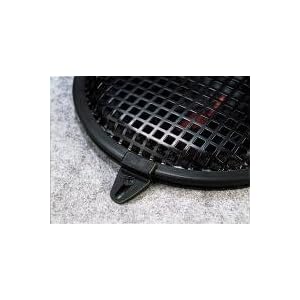
12" Waffle speaker grill ($5.95 + $7.00 shipping)
+points: cheap, protects from most accidents.
- points: Doesn't protect from pencil-pokes, wires, chopsticks, or drink spills.
Moderately Better:

12" Subwoofer grills ($25.20/pair, $20 shipping = $24 ea)
+points: Slightly better looking, better protection
- points: I can by a good woofer for the same price.
Best Found So Far:

Two-Piece 12" Grill: ($18 + $20 Shipping = $38 ea! minor break on shipping quantities)
+ points: Best looking, best protection from pokes and spills.
- points: Still blocks air movement very significantly. Price is ridiculous.
A Fourth kind of option is this sort of thing:
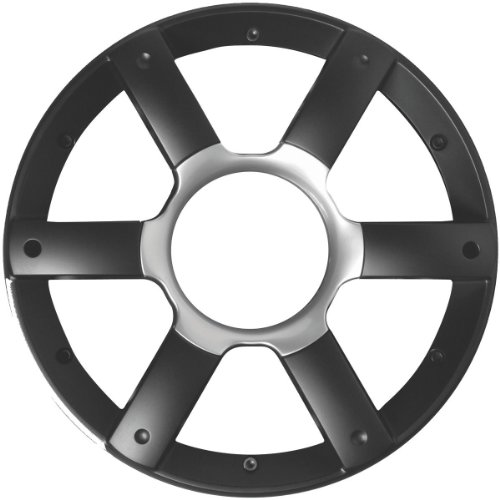
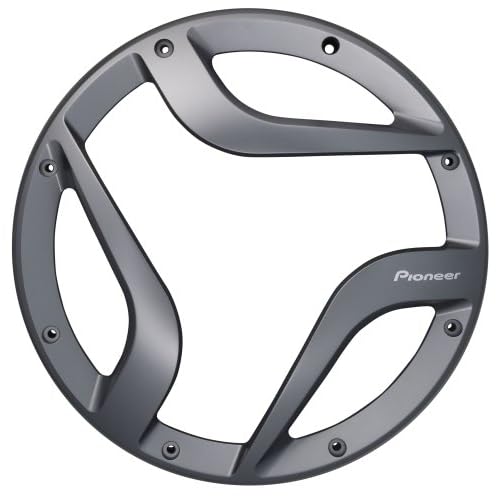
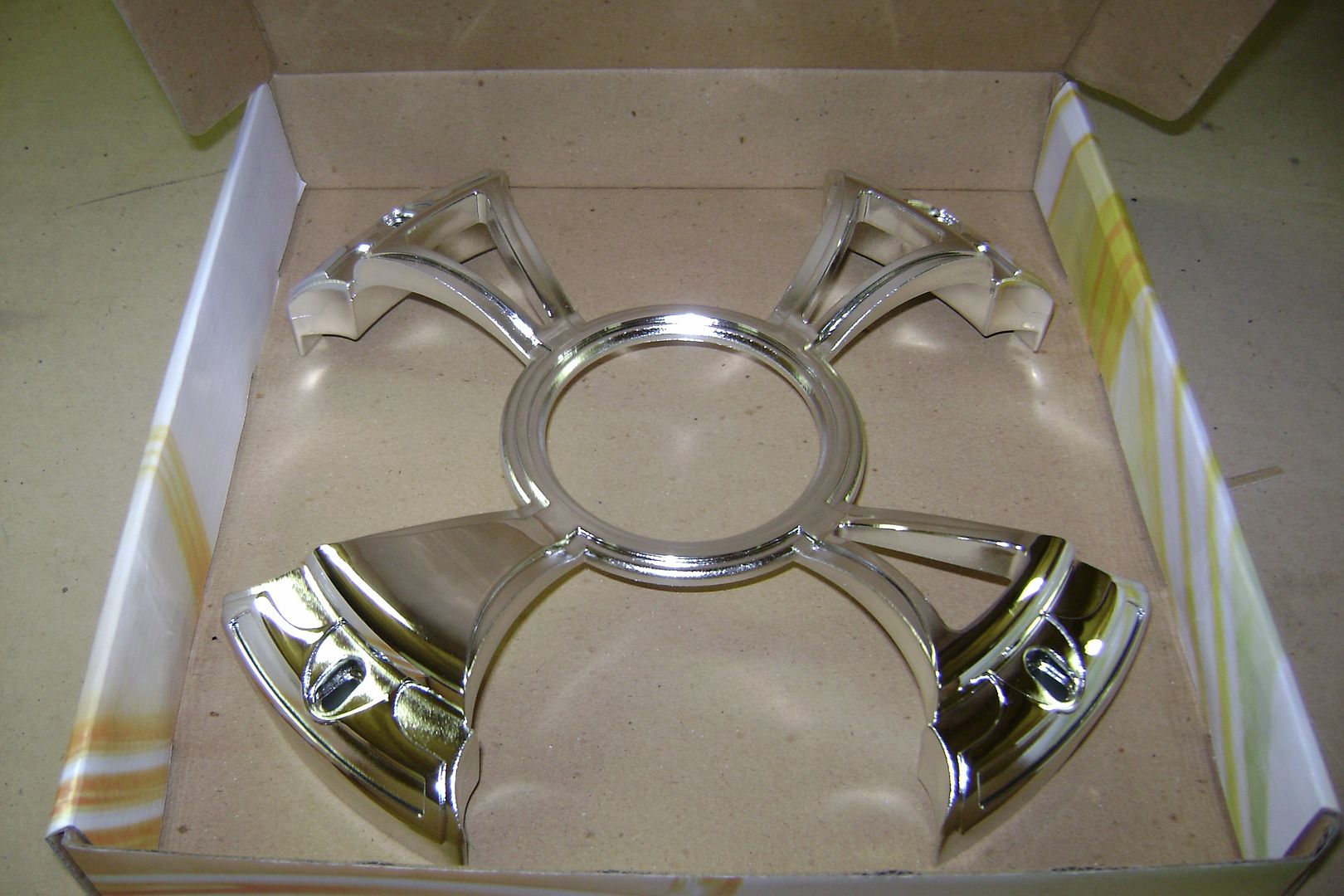
But these are also expensive, ranging from $15 + shipping to $50 (who are they kidding),
and they are almost all outright garish and ugly looking.
Who can stand to look at these? Only Pioneer seems to have any fashion-sense, and it ain't great.
On top of this, they only protect the speaker from the crudest of accidents (large falling objects).
I'm thinking a much better solution is some kind of spaced screening, bake-painted black and trimmed square (maybe bent).
The idea is metal screening to stop puncture or ripping,
and small enough holes to stop pencils and pens, yet not block air-flow.
Also, you should be able to source this stuff by the yard, (i.e., for 12" - 15" speakers per yard)
at a decent price.
And why doesn't any speaker-cover manufacturer take this seriously and offer a decent product?
Subscribe to:
Posts (Atom)